
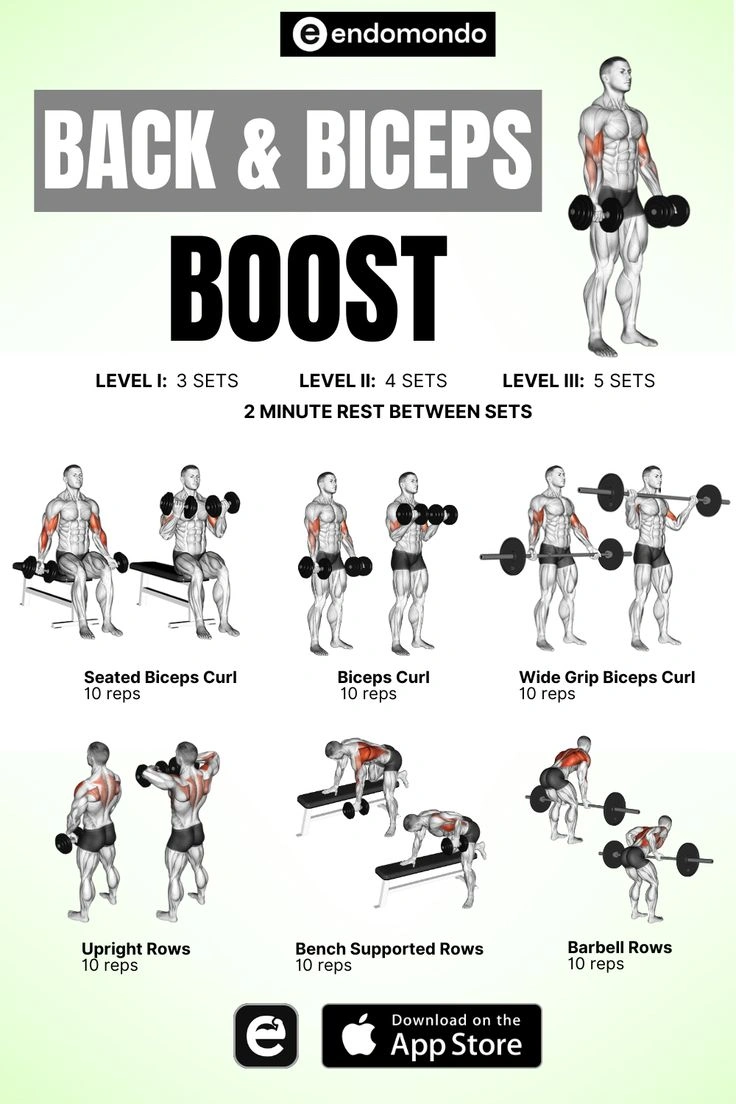
Foundations for a strong pull day
A well rounded back and bicep routine starts with a clear plan that targets the upper, middle and lower back while engaging the biceps effectively. Begin with a warm up that gently mobilises the shoulders and spine, such as three to five minutes of light cardio followed by dynamic arm swings. Prioritise controlled movements, a stable stance, and a comfortable grip to protect Back and Bicep Workout the joints. When selecting weights, aim for a challenging but manageable load that allows for strict form across all sets. As the session progresses, balance compound lifts with isolation work to stimulate thickness and peak contraction. A sensible tempo, with a deliberate eccentric phase, helps maximise muscle tension and growth over time.
Key compound lifts to drive growth
Compound movements recruit multiple muscle groups and are essential for a rewarding Back and Bicep Workout. Start with a compound pull such as the barbell bent over row or T bar row to recruit the lats, rhomboids and rear delts while also engaging the biceps. Maintain a flat back, hinge at the hips, and pull through the elbows to maximise back involvement. Include a weighted pull up or lat pulldown to stimulate width and density in the upper back. Keep repetitions steady, aiming for 6 to 12 reps per set depending on your training block. These lifts form the backbone of the session and drive functional strength for daily tasks and athletic performance.
Effective biceps focused moves
After the major pulling patterns, integrate biceps centric work to carve definition and improve arm symmetry. Concentration curls, incline dumbbell curls, and cable hammer curls offer a range of angles that emphasise the long head and brachialis. Focus on a controlled squeeze at the peak and a full stretch on the descent to maximise muscle recruitment. Avoid swinging or using momentum; instead, use a strict tempo and short rest intervals to keep the tension on the target muscles. Pair each biceps exercise with a brief finishers set to push your endurance and growth.
Texture and balance with accessory lifts
Accessory movements support the main lifts by strengthening stabilising muscles and addressing any weak points. Include face pulls to protect the shoulders and improve posture, and single arm dumbbell rows to highlight any imbalances between sides. If your shoulders tolerate higher loads, add rear delt raises to sculpt the upper back. Finish with static holds or farmer’s carries to build grip strength and core stiffness, which translates to better performance on rows and curls alike. These tweaks provide balance and long lasting results.
Programming a practical split
Design a schedule that fits your week while allowing adequate recovery. A common approach is to train back and biceps together once or twice per week, pairing the session with leg days or pushing movements on separate days. Aim for 4 to 6 movements in total, with a mix of two or three compound pulls and two to three isolation moves. Structure sets around 3 to 4 per exercise and adjust rep ranges to match your goals—hypertrophy often benefits from 8 to 12 reps with moderate to challenging loads. Don’t overlook progression; increase weights gradually, or add reps to maintain steady gains without overreaching.
Conclusion
Consistency and smart loading are the keys to steady progress in a Back and Bicep Workout. Track your workouts, listen to how your body responds, and refine your technique to keep the sleeves tight and the back broad. With attention to form and balanced programming, you’ll build strength, improve posture, and enjoy a more defined, resilient upper body.
 Nishana